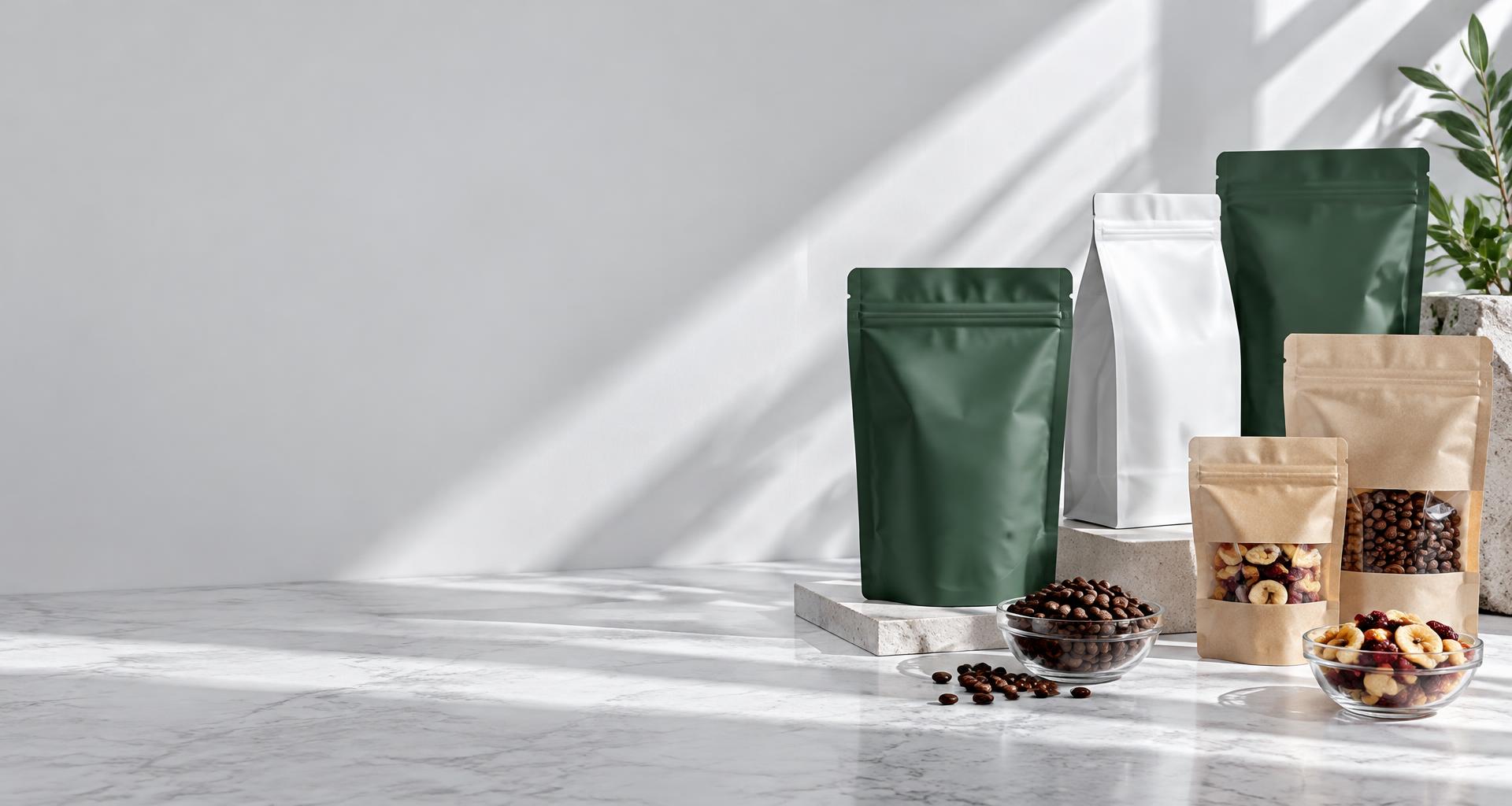
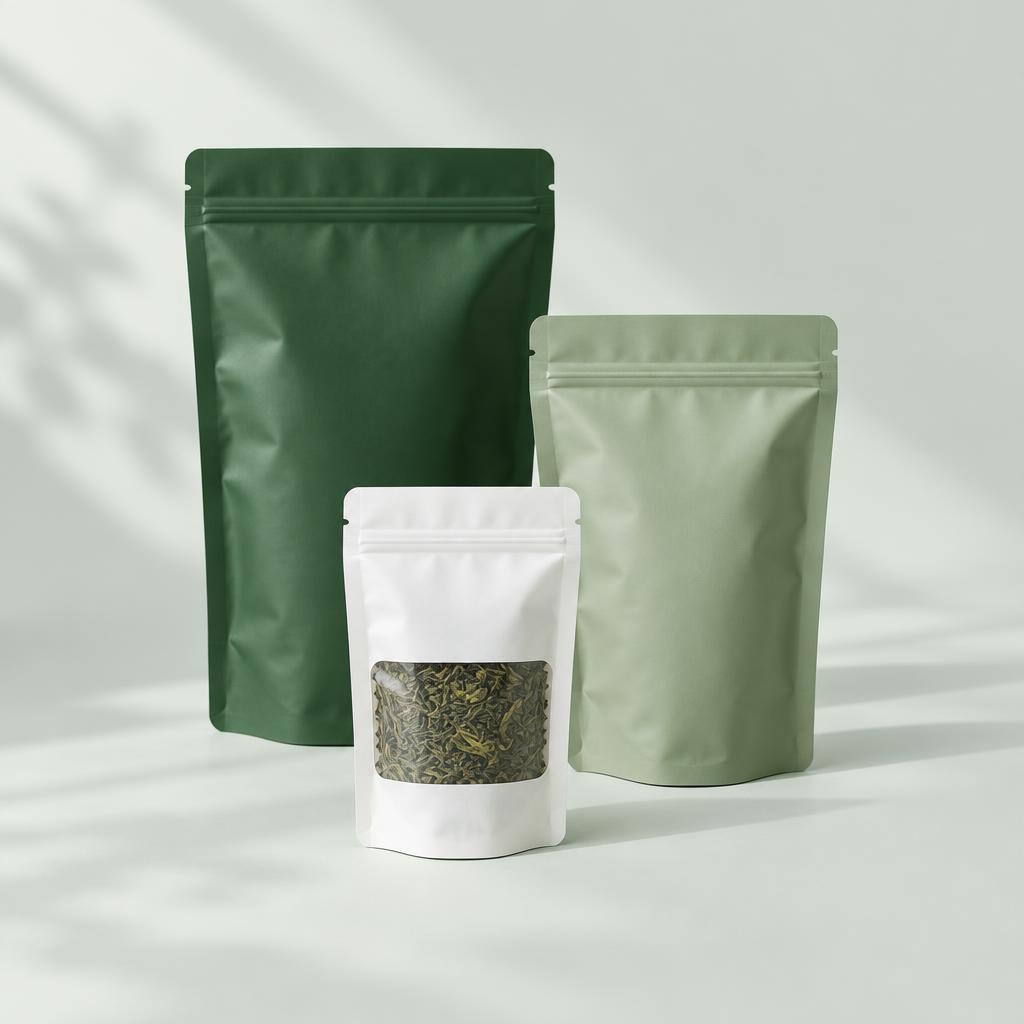
More than artwork on a pouch.
A successful custom project connects dimensions, material structure, closures and printed design. Consider how the package will stand on a shelf, appear in an online photo and handle repeated use after purchase.
- Format and fill capacity matched to your contents
- Barrier and closure requirements for your application
- Artwork space, finish and brand consistency
- Quantities and variants planned by SKU
FROM CONCEPT TO SPECIFICATION
Plan the project in three parts.
Product & operation
Share fill weight, bulk density, shelf-life goals, storage conditions and filling equipment. Include the proposed dimensions in inches or millimeters and identify any testing or documentation needs.
Design & finish
Define your number of designs, color direction, matte or gloss preferences and window placement. Reserve space for required product information, barcodes, lot codes and any validated disposal instructions.
Approval & commercial terms
Review the final specification, artwork proof and available sample process. Confirm minimum quantities per design, pricing, production timing and delivery terms to your US destination before placing an order.
Design for the complete customer journey.
Packaging for a retail shelf needs a strong front panel and readable information. Packaging for e-commerce also needs to be considered alongside the outer shipping carton and transit conditions. A flexible pouch is not automatically a complete shipping solution.
Keep the artwork approval specific.
Request the correct dieline for the approved format before finalizing artwork. Check bleed, safe areas, seals, zipper zones, valve placement where relevant and the visibility of essential information. Review color expectations against the chosen substrate and print process.
Options shown are discussion points, not a guarantee of availability. Final structures, finishes and commercial terms are project-specific.
US BUYER QUESTIONS
Details worth getting right.
Clear expectations make a better starting point for every packaging conversation.
Prepare your project detailsWhat determines the price of a packaging project?
Format, dimensions, material structure, print coverage, finishes, closures and order quantity all affect pricing. Share the number of designs or SKUs and the quantity for each so a project-specific quote can be prepared. Pricing and commercial terms require confirmation; no standard price is implied.
Are minimum quantities and lead times the same for every pouch?
No. Stock-style formats and custom-printed projects can have different requirements. Ask for minimums by format and design, artwork approval timing, production scheduling and delivery terms to your US destination before committing to a launch date.
How should I choose a pouch size?
Start with your target fill weight in ounces or pounds, or grams, and provide a product sample specification if available. Product density, headspace, gusset depth and seal area affect capacity. Dimensions alone do not guarantee a particular fill weight.
What should I check for food-contact packaging?
Request documentation for the exact material structure and intended food-contact conditions, including temperature and storage duration. Suitability is application-specific; this website does not certify a package as FDA-approved or establish regulatory compliance.
Can I use a recyclable claim on packaging sold in the US?
Only after reviewing the finished structure, supporting evidence and access to appropriate recycling facilities for your audience. Review current FTC Green Guides and applicable state requirements. A mono-material design or paper-like finish alone is not enough to support an unqualified claim.
YOUR NEXT PRODUCTION DECISION
Bring us the product. Start with the right questions.
Format, fill weight, artwork, quantity and US destination—one clear packaging brief.